
Historically applied to naturally yellow quartz, the name "citrine" now also refers to heated amethyst
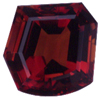
The name"citrine" comes from the French citron, meaning "lemon," and has been used in reference to quartz that has a somewhat dark yellow color. Naturally colored citrine has the dark, blackish color seen in the photograph on the next page.However, this material has never been particularly popular as a gemstone.
In 1883, the Brazilians discovered by chance that heating amethyst (purple quartz) caused its color to change to a vivid yellow. Because this color resembles that of the gemstone topaz, this material was mistakenly called "golden topaz" for many years. However, topaz is a completely different mineral from quartz. Today, heated amethysts such as those in the earrings shown below are called "citrine" and are used as a jewelry material.
Most amethysts will alter to citrine when heated to approximately 450°C (840°F). This heating is considered an acceptable treatment that brings out the latent beauty of a stone. Similarly, most aquamarine is green beryl that has been treated at temperatures nearing 420°C (790°F). In both cases, the treatment is permanent, and once the color has been altered it will not revert back to the original.
The German city of Idar-Oberstein, located some 120 kilometers (72 miles) west-southwest of Frankfurt, has long been associated with citrine and amethyst. Chalcedony, a variety of quartz, was discovered in the area in 1497. Later, amethyst was also discovered there, and the polishing of both of these materials continued. A period of decline followed the playing out of the chalcedony mines, but in the 1830s, settlers from Idar who had emigrated to Brazil began sending chalcedony rough back home, causing a resurgence of activity. Motors were used in the polishing process from about 1900, and the export of chalcedony, amethyst, and citrine to various European cities, such as St. Petersburg in Russia, flourished. Even now there are about 400 lapidaries (stone cutters) in Idar, and it is considered to be among the major colored-stone polishing centers of the world. Along with amethyst and chalcedony, citrine is one of the gemstones that have helped sustain the city of Idar.

Name of Mineral : Quartz
Mohs Hardness : 7
Refractive Index : 1.544~1.553
Specific Gravity : 2.66

Weight : 40.14 ct
Size (mm) : L 23.4 x W 19.4 x D 13.06
Goias, Brazil
Untreated
Gem Quality
us $1,200
CHARACTERISTICS BY SOURCE
Brazil is currently the most important source of amethyst, the raw material for citrine. Amethyst is found in the states of Bahia, Rio Grande do Sul, Minas Gerais, and Goias. The deep orange-yellow citrines used in the earrings shown hereare from Rio Grande do Sul. This color is named "palmeira" in reference to the mining region where it was originally found. Amethyst is also mined in Zambia, but Zambian material does not change to a citrine color when heated.

Weight : 21.81 ct
Size (mm): L 21.8 x W 15.5 x D 11.37
Heated
US $600
Bahia
The state of Bahia is located north of the state of Minas Gerais, the center of gemstone mining in Brazil. Citrine made by heating the amethyst mined from this area is called "bahia" citrine. Its color is a light yellow. Fairly large stones are mined here, and they are relatively inexpensive compared to most other faceted gemstones.
Madeira
The state of Bahia is located north of the state of Minas Gerais, the center of gemstone mining in Brazil. Citrine made by heating the amethyst mined from this area is called "bahia" citrine. Its color is a light yellow. Fairly large stones are mined here, and they are relatively inexpensive compared to most other faceted gemstones.
Weight : 9.67 ct
Size (mm):(13.0 x 15.3) x
D 9.08
Heated
US $600
Ametrine
Ametrine, which displays the colors of both amethyst and citrine, is also called "bi-colored amethyst-citrine" or "bi-colored citrine-amethyst."

Weight : 6.20 ct
Size (mm): L 11.9 x W 9.1 x
D 7.29
Untreated
US $300
JUDGING QUALITY
When judging the quality of citrine, which varies in color depending upon the source, the key consideration is whether it has a pure color without any grayish or blackish overtones.
The selection of color between palmeira, madeira, and bahia is a matter of personal preference. Choosing between material from different sources also depends upon what type of jewelry it will be used in.
Comparing the beauty of gemstones based on the tone of their colors is meaningless, since that is a matter of personal preference. Keep in mind, however, that the popularity of a certain color is a factor that eventually affects scarcity and value. A proper understanding of gemstone quality will eventually spark an interest in lighter-colored, beautiful gemstones. As more people come to seek out such gems in the future, they will become increasingly scarce, resulting in higher values for some of them.
QUALITY SCALE
CITRINES
Heated

HOW TO CHOOSE
Despite its beauty, citrine is relatively inexpensive compared to other faceted gemstones. When choosing a citrine, keep in mind that this is a case where you can enjoy both beauty and size. Even in very fine qualities, a pair of modern earrings with two palmeira stones totaling 5 carats, or a brooch or pendant with a 50-carat bahia citrine, can be purchased at prices that would not be possible in other gemstones.
It is best to avoid accessory-quality material, even in large sizes, because such stones lack beauty and do not exhibit the best qualities that citrine has to offer.
The value of a three-carat-size citrine of jewelry quality is approximately US $80 for the stone alone. (2001)
A GEM OF VALUE

Weight:4.92ct
Size(mm):L12.1 x W10.0 x D7.02
Heated
Gem Quality
US $150
The 3 quality zones as they appear in the quality scale

Quantity distribution of gems that are polished to 3-carat size.

