
Created by marine microorganisms, each piece of coral has its own unique character.
In Scotland, there is a saying that coral brings beauty and prosperity to young girls.
Coral is neither plant nor mineral, but rather a product of microorganisms that live in the ocean. It is composed mainly of calcium carbonate-the same as the outer portion of pearls- and forms slowly over time in nature, with no human intervention. It has long been said that coral has the power to protect one from evil spirits and to bring good fortune, and it was used extensively during the ancient Greek and Roman ages. The deep red coral from the Mediterranean Sea was introduced to Japan via the Silk Road during the Nara Period (710-784AD) and is still called kowatari (literally, "through Persia") there.
The photograph below shows a ring with a beautiful pink coral, measuring 9 millimeters (0.35 inch) in diameter, set with high-quality diamonds to either side. The necklace to the next page is comprised of beautiful pieces with very even color and very few cracks or fractures.
The gathering of gem coral began with drag-netting, which was replaced by diving around the middle of the 20th century. Today, robots are being used on deep ocean floors, and the environment is protected as the coral is gathered. The Washington Treaty regulates the harvest of hexacorallia coral (soft coral), the type that forms coral reefs, whereas the material used in jewelry is a different variety called octocorallia coral. Black coral is a type of soft coral that is similar to hexacorallia coral. In 1868, a ban on coral fishing in Japan was lifted, and by the 20th century exports to the Mediterranean coral processing center of Torre de Greco in southern Italy flourished. The Japanese had preferred the red Mediterranean coral for many years, but the Italian coral merchants set their sights on the beauty o the light-colored coral that came from Japan. They especially noticed a material that the Japanese called "boke," a light pink color with very even coloration that is now called "angel skin." To keep the prices from rising, the Italians referred to this as "charbo" (faded color), or "insignificante" (boring). One can only praise the deep understanding of beauty and excellent business sense of these Italian merchants.
Coral is easily attacked by acid such as lemon juice and vinegar, and some pieces are specially processed to protect their surfaces. Also, since coral's hardness is low at 3 1/2, it should be stored separately from other gemstones. The secret to preserving coral's beauty is to wipe it with a soft cloth after each use.
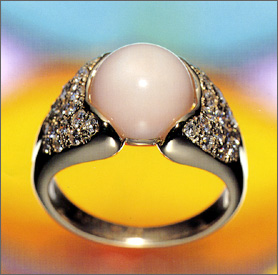
Ring, Gold
Coral 1pc
Untreated
Diamond 18pc
US $3,000
Name of Mineral : Coral
Mohs Hardness :3 1/2
Refractive Index :1.486~1.658
Specific Gravity :1.35
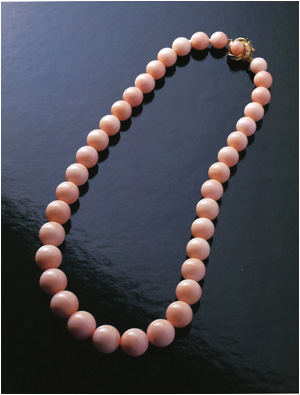
37pc
Total Weight: 74.46g
Size(mm): Dia. 9~13
Untreated
Gem Quality
SOURCES AND COLORS
The octocorallia coral that is used for gem purpose is harvested from three main areas- the Mediterranean Sea; Japan and Taiwan; and Hawaii and Midway. The size, color, and quality of the raw material vary widely between these sources. Differences in the natural environment cause each type of coral to have different characteristics.
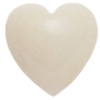
Weight:0.99g
Size(mm):L11.8 xW11.6 xD5.23
Bleached
US$40
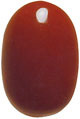
Weight:0.72g
Size(mm):L11.9 xW7.9 xD5.27
Untreated
US$300
Mediterranean Sea
The history of coral begins with coral from the Mediterranean. Mediterranean Sea coral is of the type corallium rubrum, a valuable, crimson-red coral. While its tone may vary, it is always red. This coral is easy to process because of its even color distribution, but it comes in limited sizes and appears in the market mostly as beads, cabochons, and buttons. The Mediterranean Sea coral pictured here is a deep red coral that is also called "ox blood."
Japan Taiwan
This coral provides colors such as peach and angel skin that can be called the essence of coral. On top of this, raw branches can exceed lengths of one meter (39inches) and may weigh more than ten kilograms (22lbs), surpassing coral from other sources as far as size is concerned. Red and white material covering a wide range of tone levels also is harvested from Japan and Taiwan. Since the early 20th century, this coral was exported to Italy in its raw from and used as a component of jewelry, but its heavily mottled red and pink colors make it a difficult material to process. Many coral sculptures that take advantage of this material's size were created in Japan and Taiwan.
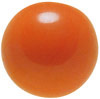
Weight:15.37g
Size(mm):Dia.22
Untreated
US$2,500
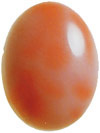
Weight:1.64g
Size(mm):L16.0 xW12.0 xD5.46
Untreated
US$25
Hawaii Midway
In the 1960s, gem-quality coral was discovered at depths of 350 to 400 meters (1,150-1,300 feet) in the waters around Midway Island. While, peach, and mixtures of these colors were harvested, as well as beautiful colors similar to angel skin. Some of the coral in these waters are harvested from depths of 2,000 meters (6,500 feet). Small pieces of coral from Hawaii/Midway have a dark color, but as the pieces get larger they take on a pink color and show stripes, eventually assuming an appearance of many red spots scattered on a pink background (as shown in the photograph). Large pieces also tend to fracture more severely.
JUDGING QUALITY
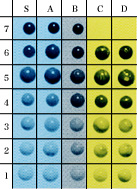
The main quality considerations for coral beads and cabochons are shape, the presence of pits or fractures, and the degree of color mottling. From the standpoint of shape, the quality of beads is judged by whether they are perfectly spherical or not. For cabochons, on the other hand, the balance of the outline or silhouette and the height of the cabochone are important considerations. The presence of pits and fractures is a fatal flaw, but no pieces are totally free from color mottling or spotting. As long as these do not detract from beauty when viewed with the unaided eye, quality can be judged according to the overall balance of the piece.
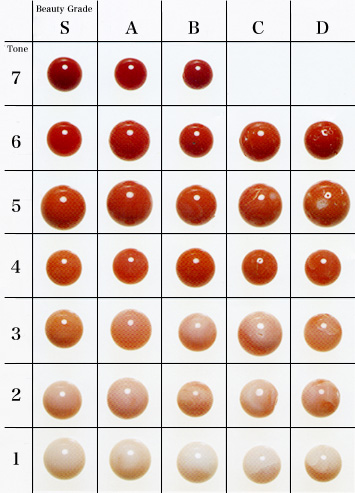
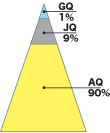
Beauty grade S on the quality scale represents material that is truly rare. At best, it accounts for only ten percent of all gem-quality material, which in turn represents only one percent of all coral. Pieces exceeding 10 millimeters (0.39 inch) are especially rare. Strictly speaking, every piece of coral created by nature is different, each with its own unique character. As long as fractures and color mottling are not serious flaws, they might even be thought of as evidence of the uniqueness of each piece. Creating a market environment where a degree of pitting and fracturing is permitted is a priority in the world of coral jewelry.
It is important that the beads in necklaces match in overall color and size, and that the drill holes for stringing are precisely centered.
QUALITY SCALE
PINK AND RED CORALS
Untreated
HOW TO CHOOSE
It is best to choose a depth of color that you like, according to your budget. Of course, gem quality is recommended, but production of gem-quality material over 10 millimeters in diameter is limited. Large pieces with a deep red color are harvested in limited quantities and therefore more expensive, but selecting a tone of color is absolutely a matter of personal preference. Light tones, such as angel skin of tone levels 1 to 2 in beauty grade S, have become more popular in recent years. As can be said of any gemstone, coral is a product of nature, so none are perfect. Keep in mind the key considerations and select one that impresses you as beautiful.
The value of a ten millimeter (0.39 inch) pink coral bead of jewelry quality is approximately US$30 per piece.(2001)
A GEM OF VALUE
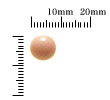
Weight:1.08g
Size(mm)Diameter 9.2
Untreated
Gem Quality
US $150
The 3 quality zones as they appear in the quality scale
Quantity distribution of coral that is polished to approximately 10mm(0.39inch)
| VALUE INDEX | ||||||||||||||||
| ||||||||||||||||
 | ||||||||||||||||
|